
Written by Thomas Walker.
Last week, I went to Trier, Germany. Trier is a very old city that still retains much of its original Roman architecture. There are several locations where the original walls are still standing or still identifiable, as well as ruins from the Roman baths, amphitheater, and a basilica built by Constantine. Of course, there were obviously many other examples of old architecture between Roman times and now, but I find it utterly amazing to walk down a street that looks mostly as it did to the same people walking it 200-300 years ago.

This is the Porta Nigra (“Black Gate”), built 160-180 AD. It used to be white, but centuries of weathering have turned it black, thus the name given to it during the Middle Ages stuck. It was originally built to be a gate to the city. In the 11th century, it was destined to be dismantled, and the bricks reused in other projects, which was often the case with Roman buildings. A clergyman named Simeon, in an attempt to save the building, took up residence in the building. He was canonized after his death, and the gate was turned into a church, which is why it still exists today.

Nearby, there was a Roman structure that would have housed one of the three bathhouses in the city (see below). This one would have been one of the largest in the Roman Empire, attesting to the wealth and prestige of the city. The presence of the amphitheater also supports this. I did not get to explore the ruins because I spent too much time in the museums (more on that later), so I plan on going back.
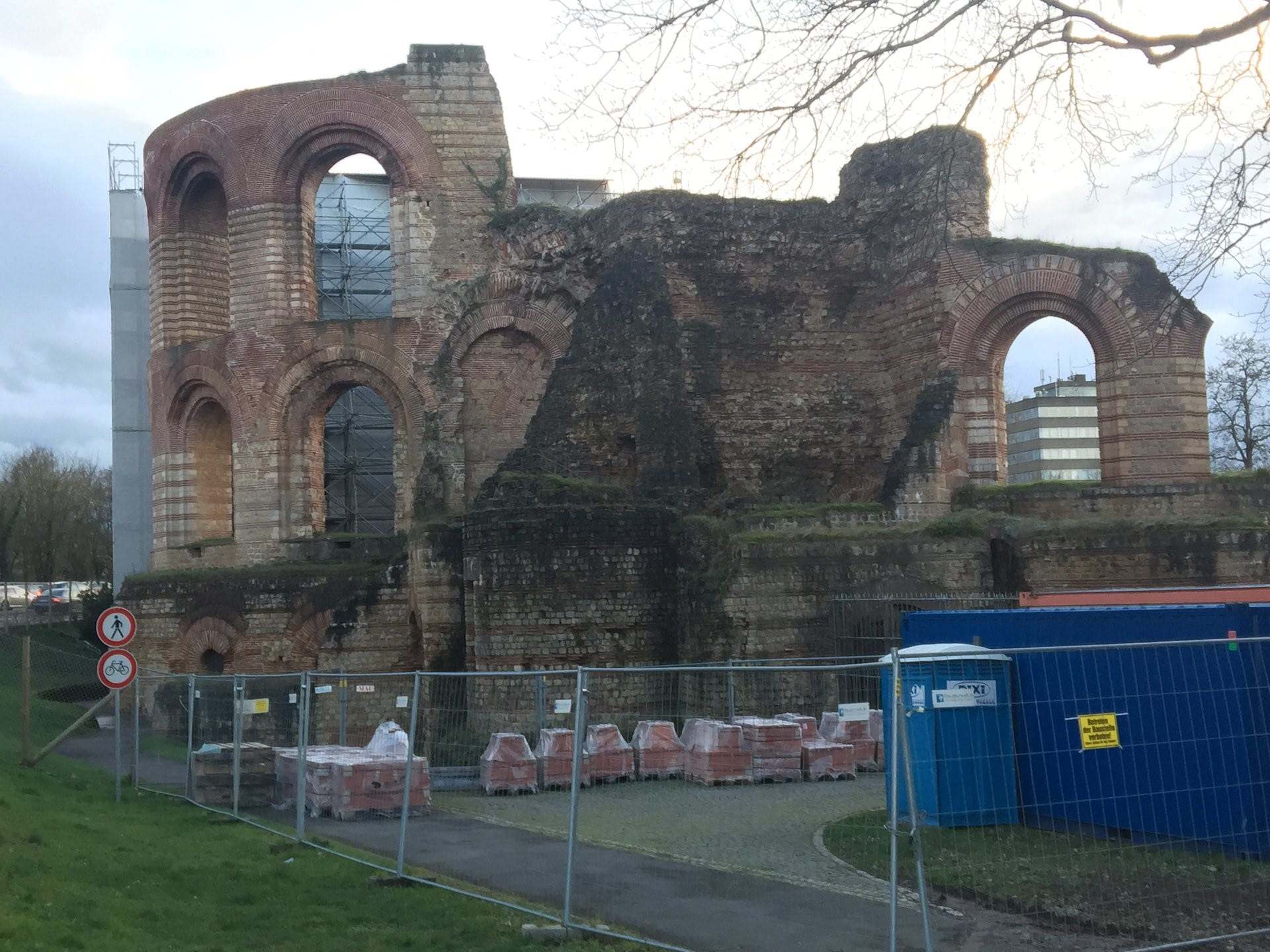

Below is one of the original Roman walls the museum was built on. There were many coins and mint supplies found around this wall during excavations for the museum, suggesting the Roman Trier mint was nearby. The gift shop had several genuine Roman coins for sale, but they were all low-grade, high-priced, and had no provenance to Trier.

Now for a bit of history into the town. The name “Trier” stems from the name “Trevori,” which was the name of the Gallic tribe that was living in the area. The city was annexed by the Roman Empire after the defeat of the Gauls by our good friend Julius Caesar. According to legend, the city was founded 1,300 years before the foundation of the Roman Empire by a man called Trebeta. This legend is recorded by a medieval inscription on the “Red House”: “ANTE ROMAM TREVIRIS STETIT ANNIS MILLE TRECENTIS. PERSTET ET ÆTERNA PACE FRVATVR. AMEN.”

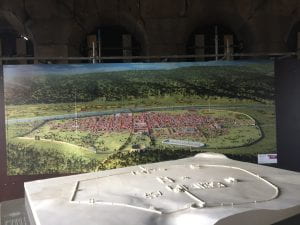
During the Middle Ages, the City of Trier tried using this legend (since proven to only be such) to gain autonomy from the Archbishopric of Trier. Alas, they were unsuccessful. As a part of the Roman Empire, the name was changed by emperor Augustus to “Augusta Treverorum.” He then decided that this city should be one of the regional capitals. The city quickly became of great importance and size, with upwards of 80,000 people. An amphitheater was built in 100 AD, and a major mint was established in the 3rd Century AD, signifying the importance of Trier.
In the 3rd Century, Trier became the seat of an archbishopric, which is basically an area where the archbishop has authority. This early start eventually made it one of the most
important states in the Holy Roman Empire (or as my high school history teacher called it, the Not-Holy Not-Roman Not-Empire). Then in the early 5th century the city was captured by the Franks, then by Attila and the Huns in 451, and then firmly held by the Franks again in 475 AD. The city became incorperated into the Kingdom of Lorraine in 843 with the Treaty of Verdun, ruled by one of Charlemange’s three grandsons, Lothair II. When he died in 870, Trier became part of the East Frankish Empire under Henry I, which would later become Germany.
An example of the Archbishop’s power was erected in 958 in the market square, which stated his authority and that God, through him, will protect the city. The original is in the city museum for protection, and a replica was put in its place. As you can see, this amount of power is very likely the reason the city tried to break away from the archbishopric:

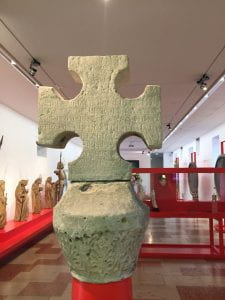
I did not get a good picture of the cross in context, but it can be seen over the hut in the center of the picture.
The city of Trier got a boost in the first half of the 14th Century when Archbishop 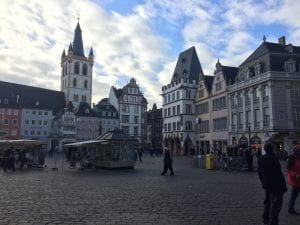 Baldwin of Luxembourg took the position from 1307 to 1354. He was elected into the position at 22 years old, and was very reluctantly recognized by the people of Trier. During his term, he greatly expanded the city’s territory and made it quite prosperous.
Archbishop Baldwin’s grave in the Trier Cathedral (which was INCREDIBLY beautiful and ornate):
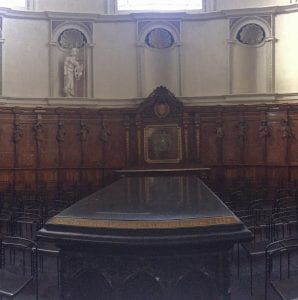
In 1583, Trier was finally able to achieve its dreams of autonomy.
Now, as a coin collector, I have to mention the coins in the museums. In the first museum, there were only a few dozen coins on display, but they were a selection spanning 2,100 years from the Roman Republic to the Euro. The audio tour gave a fascinating tale on how they each related to the history of the region and what events and cultural aspects led to the next coin type. As I am a visual learner, I was disappointed because I don’t think I grasped the info as well as I could have if I had read it. After finishing up at this museum, it was 3:30pm. I had become separated from the friends I had come with, and they happened to be on the other side of the city. I meandered over there to the museum they were in by 4:00pm. When I arrived, they had already toured the museum, so I was a bit disappointed. Then they start talking with me excitedly about the coins on display.
Since none of them collect coins, I knew the display must have been amazing. Now with only 45 minutes to tour the museum, I buy a ticket and proceed to look at as many artifacts as possible and find this legendary coin display. Most of the museum comprised of Roman artifacts attesting to the wealth of the ancient city. Apparently, there was a path dedicated to monuments erected for the dead.
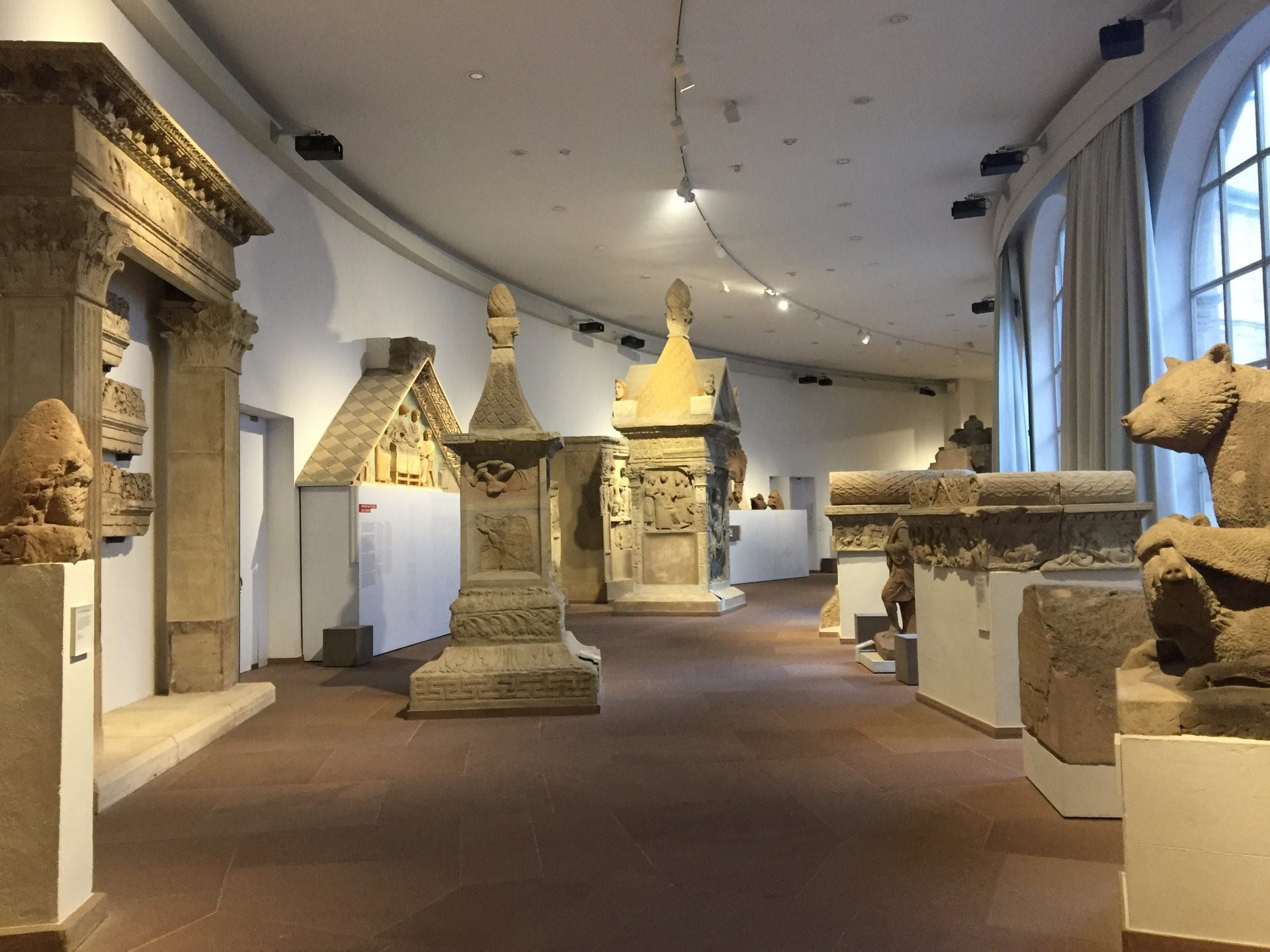
I soon found that I had the whole museum to myself, and after I was done with each room, a guard would lock it up behind me. The closer it got to 5:00 pm, the more irritated the staff started to look. So I rushed through the exhibits trying to feast my eyes and camera on as much as possible as quickly as possible. I soon get to the end with 15 minutes to spare, but I did not see any impressive displays of coins. Knowing I could not have simply missed it, I walk up to the security guard (whose face turns to “Aw, crap, what does he want?”). I just simply ask “Münzen?” and the guard brightens and leads me to the glory room. Here is what greets me:
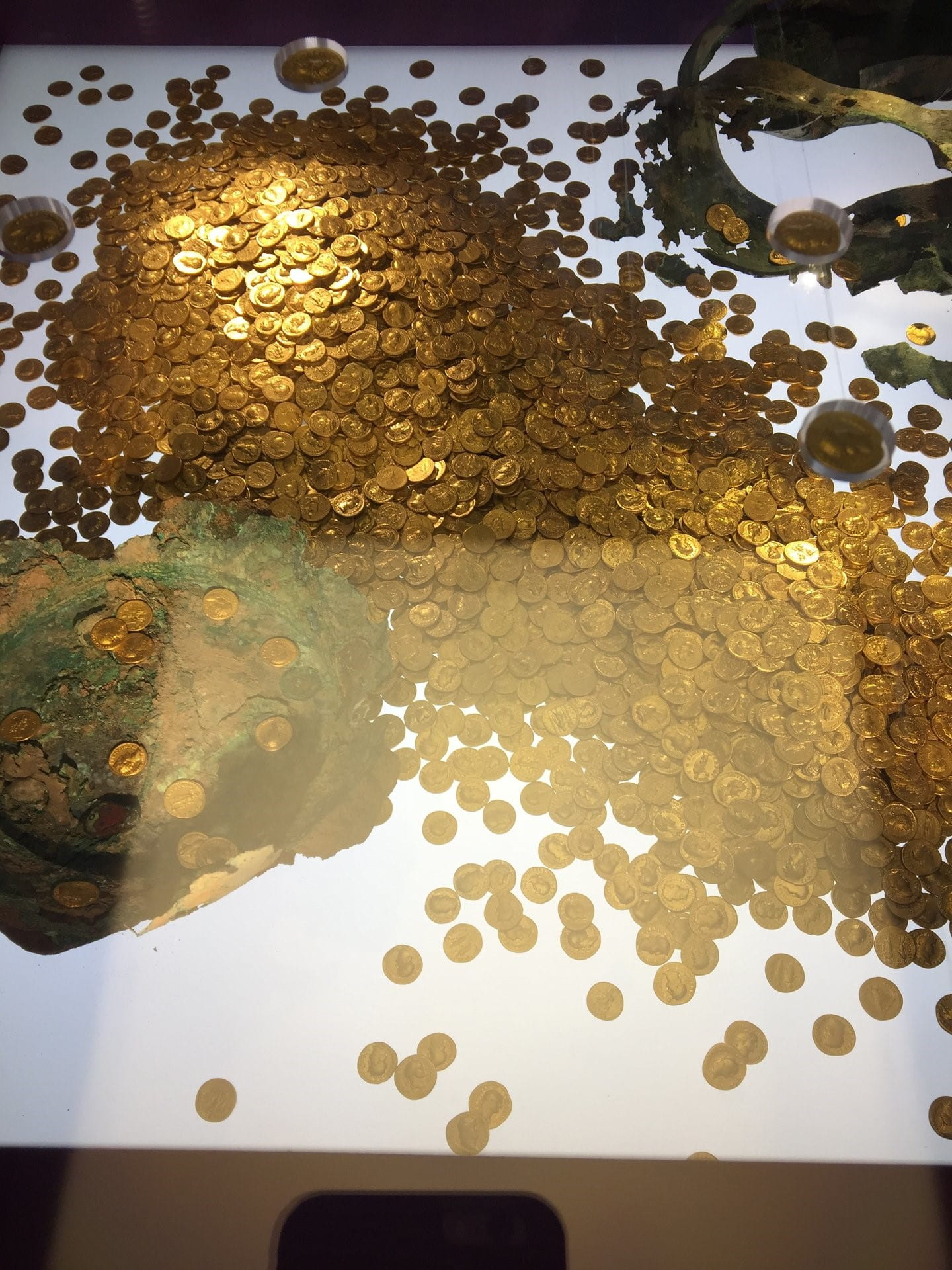
A giant pile of gorgeous Roman aurii, the largest intact hoard of such in the world. I can assure you I had a stupid grin on my face since I had never seen so many incredibly valuable coins heaped in one place before.


 then we went out for dinner. We stopped for a quick kebab at a restaurant downtown called Burger Kebab. (A kebab in France is not the meat and vegetables with a skewer, however, a wrap that is kind of like a gyro. You can choose to either have it on bread or in a tortilla, or gallete in French.) Then, we took a quick walk around the downtown area, and she showed me where everything is.
 class before about the cathedral, so it is very near and dear to my heart. I am sure that at some point during the semester, I will visit it and write a post for it.) After that, Clem showed me how to take the bus, and we went back to her place.


 to find this small GoPro. I was already thinking about how I was going to pay for it, but for Shan’s sake Brando and I went back to the lake to look for it. I had done the most strenuous kind of skiing TWICE now, and was starting to really feel the exhaustion set in. We finally got to the part where I tumbled the most, Brando skied down and looked inside and literally just plucked the GoPro from the mass of snow. It was absolutely ridiculous. Before this point, our friends had kept saying we were invincible because of all the almost-L’s, but when this happened I truly believed it.
 I’m from Charleston, SC (southerners know it well, north/westerners not so much), where downtown is incredibly fashion-oriented. Every young person is looking at every other young person’s outfit, and that’s just the way it is – definitely shallow and judgmental, but can also be creative and inspiring. Milan is like this but on the highest level known to man. Every single person looks like they’re late for an editorial shoot in the newest Vogue magazine. In the seven-story malls just a corner of any store is easily worth more than my semester tuition, but hey, might as well try it on.
 fancy stores, and they lead you right up to the cathedral of Milan, with a nice spacious square in front. I still haven’t been inside but I’m sure it’s nice like most European cathedrals.